Pelis Por Pachamama

May 5, 2009

TRANSITION QUICK LINKS:

(español) transicion.ning.com ¡ WIKI España ¡ Texto Elemental (primer) ¡ Tiempos de Transición ¡ Artículo Ecologist ¡ BCN en Transicion primero evento ¡ VID archivo

(English) Transition Towns ¡ Transition Primer ¡ Transition Handbook ¡ Transition Forum ¡ Transition Cities ¡  Transition Culture (Rob Hopkins blog) ¡ Transition Town Totnes ¡ (VIDS) Rob Hopkins interview ¡ Transition Lewes ¡ Transition Cities Conference ¡ Audio interviews ¡ Transition radio

poster-small

BCN en Transición presente:

Pelis Por Pachamama

(estamos editando esta post, el cartel es aqui. IMC-BCN post aqui. BCN en TCN post aqui)

Menu Del Dia

Primer Plato

Segundo Plato

Postre

Viernes 8 Mayo

Donde

Quando

Por Que

www.transicion.ning.com

aqui mapa

map

>M> Fontana – c/ asturias, drecha por c/ Verdi, #28 = La Quimera (es muy circa Plaza de la revolucio)

The films, getting there, slowly:

Primero plato (35 mins)

1-      11th tour / an inconvenient truth                   2 +/ 2.5 =        2.5 / 4.5

2-      Waking life                                                                            3.14

3-      Gunter Pauli @ Global Eco Forum (selected part)                 ?

4-      Masdar – city of the future                                                   2

5-      Blessed Unrest – Paul Hawken + Wiser Earth                       5.53

6-      Battle in seattle                                                                      2.5

  1. 7-      Climate camp                                                                        @2.5

8-      Jaime Lerner – Acupuntura Urbana                                       3

9-      Jaime Lerner Sing the sustainable song                                1

10-  Hort de Gràcia (2)                                                                 4.39

Secondo plato (40 mins)

11-  i, in the eye of the storm                                                       14 mins

12-  Una Muerta en Sion                                                              26 min

pacha pelis

soon all these films will be viewable from this post,

pronto puedes ver todos los pelis aqui en esta blog…

La ultima hora. Trailer

Despertando a la Vida (Waking Life) – Sobre la Evolución

(full film here)

FUSPEY

Fritjof Capra:The sustainable shift comes from a spiritual shift

Paul Hawken, Blessed Unrest and WiserEarth

(Hour long interview here )

Transition Town Lewes

TRANSITION TOWNS: An Interview with Rob Hopkins

Stewart Brand: Why squatter cities are a good thing

Climate camp 2008 @ Kingsnorth, UK

Batalla En Seattle (Battle In Seattle)

Una Muerte en Sion


A revelation

April 20, 2009

How to do stuff on the cheap, be creative, be funny and then become legends…

“Revelate”, is the top tune from Irish group the Frames. The music video for the song was made for £2, about 5 years ago, and was mostly done by the lads acting the bollix in front of security cameras and then asking for the footage…. legendry. Enjoy. PS, the singer Glen Hansard, won an oscar for best musical for the film ONCE last year, heres top tune


Has Argentina anything to offer Waterford, Ireland and beyond?

March 28, 2009

How have things panned out in Waterford?  Did the occupiers of the factory there ever get to see “The Take“? if so what were their impressions, were they inspired, could similar strategies be built up in ireland? Are similar bottom up movemtents starting to grow? Can we learn from Argentina?

Good luck to all in Ireland for M30, let us hope that the “green isle” continues to wake out of its 15 year slumber, now that the tiger has fucked off, and let Biffo and his shower follow….

The Wests Awake

  plough


The Starry Plough, flag of the Irish Citizen Army flies in Waterford 

 (Sat Jan 31, 2009)

  http://thetake.org/


National Gallery Hides Art: RTE Hides News: Artist Hits Nail On Head: Guards Involved

The Take…

In suburban Buenos Aires, thirty unemployed auto-parts workers walk into their idle factory, roll out sleeping mats, and refuse to leave. All they want is to re-start the silent machines. With The Take, director Avi Lewis, one of Canada’s most outspoken journalists, and writer Naomi Klein, author of the international bestseller No Logo, champion a radical economic manifesto for the 21st century. But what shines through in the film is the simple drama of workers’ lives and their struggle: the demand for dignity and the searing injustice of dignity denied.


Bold, Beautiful, Blooming Barcelona asks: What would it mean to win?

March 9, 2009

The Gracia community garden radio documentary trilogy and accompanying article

1 – Entering, Breaking ground, dreams of a greener barrio.
2 – Murals and kids
3 – Lauras garden tour

VIDEO : Hort de Gràcia Web: http://horteres.org/

Hort Comunitari: The Gracia community garden radio documentary trilogy The Gracia community garden radio documentary trilogy and accompanying article Springtime in Europe and the Earths life’s cycle is in bloom again. The 3 parts of the radio documentary capture magical moments in the recent history of one of the most exciting projects in Barcelona at present, our community garden in Gracia. This article was written after a lovely Valentines weekend of much open, shared and participative activity; the highlight of which was our collective mural day in the garden. It is hoped that some of the life, current ideas, projects, tools, spaces, bargains, oddities, dreams, passions and goings on of the city and her peoples are communicated here-in.

Friday… Thinking about winning

Saturday… Painting pictures and feeling like we are winning

Sunday… Sharing passions, playing and doing, Remembering the South.

______________________________________

Friday… Thinking about winning What would it mean to win?

After work, print off the Transition Handbook freely due to creative commons and begin reading. Our BCN en Transición groups are in between the “mulling” and
“setting up of steering group and designing its demise from the outset” (step 1 of the 12 steps) stages of this wonderful viral movement that has exploded in the last 2 years, thanks to the vision of Rob Hopkins and his crew in Kinsale, which might just be the answer to both climate change and peak oil. Eitherway, communities are organising and resilient communities are (re)forming, horizontal, seemingly chaotic organising is happening and dreams of less oil dependant communities are slowly becoming realities. Much that has been lost in the recent years of the “oil age” is being remembered; old skills, stories, recipes, building techniques as well as local culture and resilience and for an ever widening and diverse group in BCN, we too we are thinking positive and dreaming boldly. We envisage each already established and much celebrated barrio (neighbourhood) organising itself on the TI guidelines… The recurring themes of the book which stood out; Vision, positivity, celebration, enjoyment… as well as the idea of the “English pragmatic” idea of a clear and simple structure on top of, around, through which can be spun the chaotic and colourful web of life…

Walk down carrer (street) Urgell, alongside its recently reclaimed car lane which is now a protected 2 way bike lane and takes you right into the old town, this is a consequence of the some say “over successful” BiCiNg near free public bike rental system. Arrive down to one of my local haunts, the Moroccan café in the Barri china (the “Chinese neighbourhood”- the old red light, cheap booze, drugs and naughty bars zone from Picasso´s time), the multi cultural hugely alive city centre area of Raval. This café is the place to go for the best bocadillo (roll) in the city, let alone do they fry up the marinated Halal chicken on the grill with chopped onions and peppers thrown on, they cut the roll and pull out much of the inside to make more room for what goes in; salad, meat, chips, sauces… hhhhhmmmmm. Along with this a tasty mint tea and you’re sorted for the day. Also ideal way to catch up on world events, from the Arabic perspective, by watching Al-Jezeera, still highly emotional after recent events in Gaza, all this for a reasonable 4 Euros.

Catch up with a few friends, then down to one of the many little spaces that has done so much for the diversity that is Barcelona, with its critical takes on art, culture and politics and all the networks within networks that make it up. We went down to Riereta, the local on caller (street) Rieretta in which the amazing network KRAX are presently working out of, “KRAX investigates, connects and empowers urban creativity that responds to “cracks” in the city.” Friday night saw a small group of about 20 people came down to explore the critical theme of “What would it mean to win?” Sprawled out on cushions on the floor and with a few Xibecas (litre glass bottles of tasty BCN beer for @ E1.20) in hand we watched 2 films and after had a productive little chat;

-Léxico Familiar (Retrato de John Holloway)“, de Marcelo Expósito, 28mins
- “What would it mean to win?”, de Zanny Begg y Oliver Ressler, 40mins

The first film Familiar Lexicon is a close up interview in Spanish with John Holloway, about the theme he has been exploring: Changing the world without taking the power. The film raised many critical ideas about how the fight for a different world is being waged, from refusing to play “their” game, to the creation of new ways at looking at the world, new ways of communicating with each other, new spaces for experimenting and building in… The film finishes with examples from the Zapatistas in Mexico, with their creativity and boldness, as they occupy and destroy as well as empower, learn, excite and imagine another world.

The second film “What Would It Mean To Win?” was filmed on the blockades at the G8 summit in Heiligendamm, Germany in June 2007, where people did feel that they were indeed winning. The original was in English and German, and we watched a subtitled version, I think done by the KRAX network. Some of the people speaking on the film were part of the Turbulence collective, who have been thinking and talking about radical ideas, strategies etc and who brought out a free magazine prior to the G8 protests in which they posed the simple, yet absolutely critical question “What would it mean to win?”

Arising from the ideas posed and proposed in the films we talked about new spaces, new dialogues, new strategies led to a quick few words about the very quickly growing “movement” as it was called by George Monbiot that is the “climate camp” network; the thousands of people coming together to engage in critical dialogue, skill sharing, leading to a direct action against a climate criminal, last year Kingsnorth coal-burning power station. The movement has also gone viral and spread to more countries, Ireland is currently organising for their own camp this summer, and recently in Chicago; the largest act of civil disobedience to happen in the US. And more importantly people are organising in Denmark prior to COP15, which is the UN summit on climate change, it will also be 10 years since, returning again to Holloways argument, N30, the 30th of November in Seattle when organised passionate direct action shut down the WTO, as eco systems thinker Fritjof Capra called it “the day that the political landscape changed forever.”

A beer or 2 in local bar with friends and home early enough on the metro. (the city has a very good system, regular, cheap, till 2am on Friday, all night on Saturday, if your lucky you can catch the “lucky carriage” at about 4am, packed with people coming from one party off to another, singing, drinking, handstands… it’s a little bit illegal, but its fun)

______________________________________

Saturday… Painting pictures and feeling like we are winning

Bold, Beautiful, Blooming Barcelona on Valentines weekend

Up early enough, laze and read a bit, a quick egg and cheese tortilla (omelette) and a cup of tea up on the roof terrace called el “bosque de la esperananza” (the forest of Hope), alongside the Jamaican bar, our very own little greening the cityroof zone and hopefully soon also food production zone. Fine sights from one of the many roofs in Gracia, beyond the densely filled roof terrain is the 2000 year old inner city core of Barcelona, and beyond that still is the clear view of the “centre of the world”, the sea of the Medi-terranean, and beyond that still the horizon, that which reminds you of your own strange strange existence on this little ball flying in the heavens…

Not too much to daydream this morning, theres work to be done! Head down c/ Verdi; lots of people buzzing about, into the market, each neighbourhood still has its own food market and they are hives of life. In my one there is even a second hand book stall, you take what you want and leave a donation, granted there’s a fair bit of 1987 sport annuals and the like, but amongst them, you can find the odd gem or 2 (Umberto Eco, Henry Millar, and the like) From there into a Chinese shop to pick up a few packets of chalk for the garden, for the kids, and for the bigger kids like me, another few streets and I’m at the new 4 month old oasis on Carrer Banyoles, our local hort comunitari, or community garden for those unfamiliar with Catalan.

As you walk down the quite little street of carrer Banyoles, the first thing that hits you is the fantastic mural outside of the garden, on the wall. Its from the opening weekend 4 months back and was painted / sprayed by a couple of top level local grafitistas. Today we are having another mural painting day, this time though, it is a communitarian open participative day of learning, sharing, doing… Basically how it happened; a mural artist Kevin from NYC (New York city) who has done a bit of Muralismo in Mexico, was spending some time here in BCN, he dropped down to the garden 2 weeks back and made the proposal, it was quickly supported and this day was choosen to engage in this participative act of art which does many many things on many many levels. Audio doc 2 captures this in more detail. The theme of the mural was, more or less, Greening the city, and its structure was simply to paint basic colored forms of a city at the lower level and from that to grow plants and greenery coming from the gardens, roofs, windows… a vision of what a happier, healthier more eco effective city might look like.

People started arriving and adding their bits onto the ever growing wall… initial questions like “what size”, “what about the perspective”, “what should go here” soon eased, as the new muralistas themselves started to ease and just get into the flow of the day, I think the slowness of the action played a significant role, as little by little, people started talking to each other a bit more, well the ones that didn’t know each other previously…It unfolded as the day itself did and by evening time, and many little blobs added for windows, the city in the city, had taken on a funny creative life of its own; lots of funny, personal, details like bras, knickers, trumpets, cats, dogs, banners, kites, bikes… the painting of all these led to a feeling of deep happiness for many, this was indeed something special. During the time we talked about some of the ideas about last nights films and how this garden was in fact exactly one of those things from which things is growing. We are not playing their game, we have made our own. The garden is a space to grow food, which in itself is a huge step in a more sustainable existence, but its far more; a place to learn in, for strangers to meet, music to be enjoyed, to dream in, play chess, experiment, be alive in.

We also might have already got a world record for the biggest painted Aubergine? The side wall had 2 skulls sprayed on it, from a previous time when our solar (empty building lot with its building removed) had a squat on it, and this was artwork done in a room. The thing is that these skulls were giving one of the kids of el tribu (the tribe- the gardens alternative education group for 1 – 4 years olds) nightmares, they were also high up, 2 floor up, so creative means had to be employed. The result; the 1.2.3 whhhoooop, whereby 8 brush poles were connected together and a paint roller placed on the last one. With this one dude held the roller end after dipping it in pinky purply paint, then 1,2,3 and he flung it upward. At the same time, the dude or dudette on the other end, lifted it up and ran into the wall to roll on lines of the paint. The shades of colour were changed and with time, they got it finished, its about 10 metres wide and 6 high, it looks great and its viewable from the street when the garden door is closed. We are not actually sure if it is the worlds largest painted aubergine, if it is, great… if not, no worries, as Kev said, and I can confer: “It makes me smile as I pass by on the street”.

So as darkness rolled in, we parted our separate ways. From there I stopped off in one of my local bodegas, which are old style wine shops, where you buy directly from the large barrels of wine inside, the simple sustainable system that existed long before supermarkets and the like… On a matter of drink and economy, the difference between Ireland and Barcelona was the following; coming back with wine for a communal party in Horta sometime back, I walked with a 5 litre bottle (empty water bottle) filled with quality red wine, that’s nearly 10 pints, and it was cheaper than one pint of Guinness in some pubs at home, here you can buy a litre of wine for 1 euro! Anyway, drop into the local bodega and pick up 2 litres of wine and head on to friends apartment down by Universitat, the main part of the city university, which like the rest is under student occupation in a fight of resistance against neo liberalism and the bologna plan. In my friends apartment we talk with and play with Adrian, our friends 2 year old baby boy. It’s extraordinary the fun one can have when communicating with non language; funny faces, sounds, mimicking movements, playing the drums on the yoghurt tubs…

Then we catch the metro out to the barrio of Sants, to go to La Bahia, one of the cities many squatted social centres, this one is an ex 80´s disco bar turned into a cheap venue for artistic parts of the BCN social movements, this night it was a cabaret, I think some of the old makabra people were involved. This is a free in, bring your own booze, or buy cheap booze there and thereby assist the collective and the space directly. For a feel for the diversity in this social centre, political, artistic network with free stuff to do, you can check out the weekly calendar of events, the Info Usurpa. There are about 50 social centres in the city, and many more squatted spaces, some of which open irregularly as collective activist, social, artistic, community spaces, theres a lot of different types.

We got there late enough, just caught the tail end, had a few sups, then back on metro to Gracia to a fine old Cuban bar for a beer. Then drop into another nodal point in the Gracia barrios social network; the ateneu Rosa de Foc, (where on Thursday we screened the film the plunderabout the struggle in Ireland against shell) for a last can of Estrella (star, the main local beer from Damm) and to catch the late night tango and salsa dancing that was happening before hitting the hay after a lovely creative healthy day of living. (An Ateneu translates as a local cultural association resource space. “Rosa de Foc” is Catalan for “rose of fire”, which was what Barcelona was called during Spain’s civil war 1936-39, when it was the heart of resistance against the fascist coup led by Franco, as well as being, for a short while perhaps the best example of an anarchist revolution in action, until its bloody end in the “civil war within the civil war”, when Stalin’s communist forces quelled the revolution, George Orwell wrote much about these tragic events in his acclaimed novel Homage to Cataloniawhich he later portrayed in his later more famous book, “Animal Farm”- His story was the loose basis for the excellent film Tierra y Libertad / land and freedom by Ken Loach )

______________________________________

Sunday… Sharing passions, playing and doing, Remembering the South


Up early and into Raval again, this time to be on time for our meeting with Mike from the Transition town network, he is responsible for bringing out the monthly Transition newsletter. Before hand I wander up to the rambla Raval where there are celebrations as it is the feast day of St Eulalia, the patron saint of the city, there was a orchestra playing on a stand and behind that was an amazing participative playful exhibition, KATAKRAK, it rocked; recylcled beds, bikes and bits of pieces turned into games of play that look like animals. The kids were really excited; it was a beautiful thing to witness.

From there we got a bite to eat in Organics, a vegetarian restaurant, Mike was over for work reasons and his daughter who is doing sculpture in the city also joined us, we had an informal chat during which Mike took notes with the intention of writing an article for the Transition newsletter about how things are going for the BCN transition group which is growing and we are taking our first steps.

Some of the things talked about

- “Barcelona”, going from a place with a bold urban history to it becoming stale, merely seeking to entice more and more weekend tourists in on planes to spend their euros, while pushing out local communities… it was hip, its now stale, BUT, it could again play a lead role for future movements of urbanism.

- How the Transition model might land very well on the structure of the city of Barcelona, with its very well established Barrio structure, each still with their communal heart, the central food market. (most being beautiful 19th century steel frame construction buildings) as well as the participative role the community plays in their barrio which is most identifiable when they have their barrio festivals, not only the celebration on the streets, but also the creation of floats, street art, music etc… everyone participates, the grannies and 4 year old kids can still be seen dancing in the streets in the wee hours…

- The urban story of Barcelona, with its violent history, its loaded meaning. The city has played a huge part in the identity of the Catalans, as different from the Spanish. In the late 1700’s, the French and Spanish teamed up to lay a siege at the city. On finally winning, they entered the walled city, evicted about a fifth of the population, razed their houses and turned the area into a huge military fort, the Ciutadella, from which to control the masses. The newly homeless made their way to the beach and about 50 years later a french engineer designed a very very tight grid iron neighbourhood for them with a strange orientation. Barcelenetta was the result, and its orientation was so that, if there was future revolts, the cannons in Ciutadella could be wheeled directly to the line of the street and shoot down… Later for the World fair the hated fortress was removed and turned into a park, the green lung of this dense grey city; Parc Ciutadella.

- How the Eixample model, the grid iron system which was born when the city walls were pulled down in the 1860´s, might be well able to take the extra layer of each block being recovered, its inside turned into a green space again, as is happening under the fantastic Pro Eixample programme, but how also, another layer could be added; eco effictiveness, green zone and roofs as food production zones, and a grey water treatment plant on site to reycyle water for the plants. If its possible to do in 1, its possible for all… Thats a lot of city, from grey to green.

- Mike asked us about the role anarchism plays, if any, in the city today. There were differing views from not much, to perhaps not so much in terms of end point of “without leaders” but definately in terms of organising, the way meetings form or round assemblies, the sense of DIY get up and just do it, the sense of local organisation… Although they lost the war, maybe the battle never ended? There are indeed some similarities between anarchism and the Transition movement; grassroots bottom up organisation, decentralised locally organised autonomous groups, horizontal open networking and organising, loose informal spontaneos assembly times, ie “open space”, direct action, the community does not sit back and expect “the powers” to solve things, they organise themselves to, as Rob puts it the Transition model is something about “Unlocking the collective genius of the community”.

- The term “transition” is a very loaded term here in Barcelona, as it was the term used when fascism ended and Democracy came into being. This happened after the death of Franco in 1975 and it was a difficult time, in many ways, like somewhat in Ireland, it touches too raw a nerve. Within the spanish Transition network there is some debate about this, but perhaps the movement might assist in coming to terms with the phraseology?

- How there is such a huge need for the Transition movement to really address the city, as Rob said “If we don’t crack the cities, then we haven’t really done that much.” Claudia participated in the recent Transition city conference in Notthingham which helps us greatly. But also, if indeed, we manage to “crack” the city of Barcelona, then that opens much avenues for the entire spanish speaking world. As part of our problem here is that the movement is very much in English speaking world, but, in saying that, we have begun translation work of both texts and videos to assist here.

- How one of the big keys and something which already is so strong here, is the idea of “partying to change things”, rather than the doom and gloom, how festivals and positive events play such a part, on that note, it was pointed out that the following week there was a party in the local garden in Gracia.

Ironically enough in terms of exploring transition culture; this barrio was first created as a food production zone for the city if and when they would be under siege. Anyway, After lunch we split, Claudia biked upto the garden in Gracia, while Mike and myself walked to St. Antoni, the Eixample area just outside raval, there we talked in greater detail about the great Pro Eixample programme. We entered and visited a fine reclaimed block and talked about the idea that with water recycling, energy harvesting and energy collection, the block could sustain much of its inhabitants in the post-oil age…If possible it would be great to test one of these blocks. We got the metro up to gracia, and again went through a different urban scale, the old indepandant town outside the city of BCN, now one of her barrios but with some fine urban plazas, passing through Placa John Lennon, we swung a corner and entered the garden. Again, as the previous day, there was much activity, Claudia had already arrived and was engaged with another English girl in the garden, who had been involved in transition and permaculture movements in the UK, turns out she remembered me from last summers climate camp, busy then catching words with people for the camp radio, both during quite times at the front line, and not so quite, when cops had entered and struck many people. Mike enjoyed seeing the garden and himself and Claudia headed away, while I stayed to paint a giant chess board on the remaining concrete area of the garden, some others in the garden joined in to help and we shared nice stories and dreams, one girl had cycled from England to Barcelona.

The painting took longer than I had expected so I was a bit late up to Can Masdeu (one of the most amazing projects in Europe, maybe even beyond; Rurban Revolution) for the talk with speakers from Latin America about how things are going there, even though it was a few hours since it started, the discussion was still in full flow, with many people eager to continue to hear more from that part of the world which is seeing such change in recent years. My two Latin American friends there found it a very exciting talk; it seems there is even more now to be learnt in Europe from Latin America, in these times of economic crisis. There I also got to meet Joseph, a student from New York, who had got in contact with us and was keen to plug into to eco things going on in BCN, he is a skater dude who has done lots of interesting work with his final year hi school class, including going to Bioneers and presenting a short film they made about local food action work in their neighbourhood.

Walking back through the trees, from nature, back into the dense urban mass of BCN, we discussed how exciting these times were, that with the crisis there is even more possibility or opportunity for radical change to happen quickly. How indeed it does feel that theBlessed Unrest that Paul Hawken is talking about is really happening and how beautiful a pleasure it is to participate in things. We metroed back into Gracia, went to local bodega for another cheap glass of wine and chilled out with some nice old 50s, early 60s rock and roll, happy, content, energized and buzzed up to what the future holds in store.

(This article was first published on indymedia Ireland and recieved some coments. A  short news post was also put on Indymedia Barcelona)


Croker and the Brits

February 28, 2009

bloody-sundayToday Ireland play England in rugby in Croke Park, untill recently it was illegal to play the “foreign games” in the mecca of the GAA. My own father won medals for Dublin as a young fella and they were not given to him as it was found out that he was also playing rugby for Tarf.

Bloody Sunday was a day of violence on 21 November 1920 in Dublin, during the Irish War of Independence (19191921), which led to the deaths of more than 30 people.

The day began with the killing of fourteen of eighteen British agents of the Cairo Gang, or their informants, by the Irish Republican Army. Later that afternoon, British forces opened fire on the crowd at a Gaelic football match in Croke Park in north Dublin, killing 14 civilians, including the captain of the Tipperary football team, Michael Hogan. That same evening there were scattered shootings in the city streets, and three Irish prisoners in Dublin Castle were killed by their British captors under suspicious circumstances.

History of croker from BBC:

footage from the film Micheal Collins, a republican revolutionary and creator of the IRA, in which the day is portrayed.

Postcript; Ireland beat England, and might win the competition.

But, personally speaking, there is a huge difference between Rugby in Croker and the buzz of an all-Ireland final…. PURE PASSION!

And in case your not familiar with that funny game with the sticks, its Hurling, a traditional Gaelic game that has been played here on this island for thousands of years, its the fastest field sport in the world…


The largest act of civil disobedience to happen in the US this Monday!!!

February 27, 2009

The climate camp “movement” is growing: engage, teach, learn, demonstrate alternatives, skill share, be moved, prepare, take direct action

Al Gore: “I believe we have reached the stage where it is time for civil disobedience to prevent the construction of new coal plants.”

The largest act of civil disobedience to happen in the US this Monday!!!

Next Monday The largest act of civil disobedience will happen against global warming in the US. A large protest has been called at a coal-fired plant in Washington, D.C, 11,000 people are expected. In the days leading up to the protest, youth climate activists are organizing a conference called Power Shift ’09. Thousands of student activists plan to lobby lawmakers on Capitol Hill, urging them to rebuild the economy through bold climate and clean energy policy.

Looks like the “climate camp movement” is continuing to grow globally and momentum is building in the lead up to COP15… Ireland too are organising thing for this summer. Also Greenpeace´s “lawful excuse” court battle win might open the flood gates for more direct action…

On September 24, 2008, former U.S. Vice President Al Gore told the Clinton Global Initiative conference in New York city:

“If you’re a young person looking at the future of this planet and looking at what is being done right now, and not done, I believe we have reached the stage where it is time for civil disobedience to prevent the construction of new coal plants that do not have carbon capture and sequestration.”

To find out why things are so critical have a quick view of the trailer of his recent film; An inconveniant truth:


From Yesterdays Democracy Now show:

(listen to full audio  here )

JESSY TOLKAN: We’re a coalition of fifty really diverse organizations that range from young evangelicals to young people from indigenous communities across the country to college students. We have united around a bold vision for what we think needs to happen on climate change.

We are pushing for aggressive, short-term reductions on carbon in our country, on the range of 25 to 40 percent reductions by the year 2020 and 80 to 95 percent reductions by the year to 2050. We want an immediate moratorium on coal in this country. We want unprecedented levels of investment in clean energy infrastructure and technology. And we really want the Congress and the President to usher in a new green economy and help create millions of new green jobs.

AMY GOODMAN: I’m looking at a piece in the British paper, The Guardian, about what’s happening here, this massive amount of young people coming to Washington. It says, “The massive sign-up drive has generated a fierce rivalry between different universities to see who can bring the largest number of participants. With only 48 hours to go, Middlebury College trails the University of Vermont by only four participants with 194 coming.”

Ben Wessel, who’s leading the recruitment drive at Middlebury, says, “We are bringing over 10% of our whole student body.”

Inspirational stories continue to pour in from around the country. “One sorority in Texas has rescheduled its initiation because the dates conflicted with Power Shift, while a group in California has started its epic train journey across the States to avoid having to fly.”

AMY GOODMAN: What’s the plant you’re protesting?

DANNY CHIOTOS: It’s the Capitol Coal Plant that’s just blocks from the US Capitol. It’s providing the US Capitol and federal buildings with heat and cooling. It’s not an electricity-generating plant. And this plant is a symbol of where our Congress is at right now. We need to push them to make that transition away from coal.

And it’s not just about this plant. This plant is a symbol of a bigger problem, that we’re addicted to coal and that coal is killing people in West Virginia, in the communities that I come from.

And we have the opportunity right now to transition to create millions of green jobs all around the country and ensure that the transition happens in the places where it’s needed the most, and ensure workers in the coal industry and fossil fuels industry can find employment in these green industries.

Jessy Tolkan, Executive director of the Energy Action Coalition. Danny Chiotos, member of the Student Environmental Action Coalition.
http://www.capitolclimateaction.org/ + http://www.powershift09.org/splash
full DN! feature: Power Shift: Youth Climate Activists Swarm D.C. for Weekend of Organizing, Lobbying and Protest
http://i4.democracynow.org/2009/2/26/power_shift_youth_…swarm
+ http://blip.tv/file/get/Demnow-DemocracyNowThursdayFebr…7.mp4

Cleared: Jury decides that threat of global warming justifies breaking the law
So read a leading article in the UK´s Independant after 6 Greenpeace activists historic court win using “lawful excuse” in support of their direct action of scaling Kingsnorth coal power station in Kent, the site of last summers Climate Camp actions. On Sunday December 12, 2008 the New York Times included the Kingsnorth defence in its annual list of the most influential ideas that will change our lives. Under the heading ‘Climate-Change Defense, The’ the newspaper said the verdict ‘shook up the world of green politics’.

So who knows, the precedent is there (the same legal strategy was used when the Ploughshares finally won their courtcase), there is sure to be arrests next monday, but perhaps they will use the Greenpeace case to back up their calls for supporting Gores calls to action…?

Heres a short vid from last years direct action and police violence from Kingsnorth, as part of climate camp 2008:

Eitherway, what ever happens, fair play to the US activists. I have been in some direct contact with a few of them from Barcelona and there is definately very exciting things happening there, yes Obama has played a bit in the collective bold dreaming, and from that organising to action, but its more than that. We will see how Monday goes, it would be nice if we could let them know we support their actions and wish them well in their direct actions, confrontation with police, court time, and possibly jail time.

Climate change Coverage on Democracy Now! + largest act of civil disobedience against global warming in US
The DN! feature was one of 3 on the critical theme of Climate change, full show can be found at:
http://www.democracynow.org/shows/2009/2/26
The other 2 features were:

* Member of UN Environment Panel Warns Greenhouse Emissions Rising at Alarming, Unexpected Rate
We speak to Chris Field, a leading member of the Nobel Prize-winning Intergovernmental Panel on Climate Change, about his warning that the amount of greenhouse gases in the atmosphere is rising more rapidly than expected in recent years. Field says the current trajectory of climate change is now much worse than the IPCC had originally projected. On Wednesday, Field told a Senate panel droughts caused by global warming could make parts of the American Southwest dangerous to live in.

* Study Finds Unprecedented Growth in Climate Change Lobbying
A new report from the Center for Public Integrity reveals that the number of global warming lobbyists has increased by more than 300 percent in the past five years. In the past year, some 770 companies hired over 2,000 climate change lobbyists and spent an estimated $90 million to influence federal policy on climate change. We speak to the report’s lead author, Marianne Lavelle.

(This article was first published on Indymedia Ireland go there to view lots more Related infos)

I´ll leave you with words from George Monbiot about the UK climate camp goings on: “I find this movement the most exciting thing that I´ve ever been involved in”


Streaming from the Gaff!

February 22, 2009

An experiment with streaming audio, projecting video and the interaction between real and virual worlds took place in Dublin’s new social centre

Back in 2005 we made a short 4 minute documentary video after our succesful streaming experiment to connect the Digital Hub with the Dublin social centre, seomra spraoi (room of play in Gaelic / native Irish) as part of the “future of digital media”.  The film is viewable on Archive.org

Although it was a successful stream, it did cause some contreversay within the Indymedia Ireland collective, but we were trying to push the boundaries of communication limits in the Network Age

(very) DIY poster announving the communication action


Greening the city: Temporary urban green zones

February 16, 2009

For some time here in Barcelona, and globally via email etc, many of us have been talking about an inititiave that is simple, practical, ecological, cheap to do and can be a massive benefit to healthy urban communites. Some precedents exist already: New York City is perhaps the best that I have heard of. Perhaps Erik might be able to provide links for this. Some say it is impossible to do it here, I disagree, I think it is not only possible, but that it is feasible, and as the “eco awareness” grows and the city looks for answers to its eco problems, this is a simple, small, nice step.

This mail is to propose the idea to you, see what you think, seek support, seek your knowledge, ideas etc. Its also an invite to learn about, visit, share experiences and learning with us in the existing catalyst and example of this idea, that is alive and growing as I type: the new community garden in Gracia, Barcelona.

The idea is to seek legal authorisation to turn existing unoccupied urban solars (the sites where buildings once stood, but now demolished and awaiting re-construction) in green zones, breathing spaces for the city. This could happen at a series of levels:

1- Simply, gaining permission to enter a “grey zone”, break open the concrete, open up the earth again, enter biochar to the soil, plant certain carbon storage planting…and let it grow untill time comes (if it comes) for the site to be cleared and built upon.

2- As above, but using the space as a food production zone, a community garden, along with all the beneficial affects involved with that.


Presently Barcelona has big problems; pollution, water crisis, lack of green spaces, hi electricity use in hot summers…all of these, to an extent are related to 2 big problems we collectively need to adress and start solving; climate change and peak oil. While this project would not solve all the problems, it might begin a process by which a strategy might develop and from that, eventually, the problems might be solved.


As things stand at present, BCN is a very dense urban city, very little greenery, all this adds to the effect of heat island, that makes it even hotter in summer, this project, initially would help alleviate that effect. Presently in Gracia, my barrio and where we are trying to develop a transition initiave, a new space has been opened; our lovely urban community garden, or in catalan, HORT COMUNITARI GRACIA. This garden, is 4 months old, has much support from and is used by the neighbourhood, all types of people. A half hour audio documentary about the opening of it can be listened to here. This solar had been abandoned for 5 years and now it is amazing and growing. The thing is that people have not asked to use the space, they have taken it, they have occupied the space, and with that it could be evicted and returned to a grey zone. If we manage to develop this project I am outlining, well then, maybe our garden, and more, far more, might exist for many years. The NYC garden, apparently, uses mobile gardens, so when they have to move, they can simply to the next vacant lot.


Mobile garden, Image from Gracia hort gallery


Mural time @ the hort, linked from HORT COMUNITARI GRACIA website


Arial view of BCN and the the solar which is now a (TUGZ) Temporary urban green zone


mural

Mural detail: A Greener and more colorful city


PRECARE in Brussels, Belgium are successfully carrying out this type of temp legal space occupation project with buildings: supports an emerging network of urban projects in negotiations for temporary use of buildings

Knowledge of their existence came through KRAX, the BCN node of www.citymined.org


Zero Carbon Caravan > COP15. Live radio project(s), zero carbon world concert(s) for a zero carbon world

January 31, 2009

As Bucky Fuller, might have put it: We must learn again how to steer our little Spaceship Earth

This article is in regard to the Zero Carbon Caravan (ZCC) and related ideas in lead up to COP15, in Copenhagen December 2009,which will be one of the most important times in our collective human story. The creator of the ZCC idea is Chris Keene, supporter of CAT (centre of alternative technology) in Wales. CAT are responsible for the ZERO CARBON BRITAIN project.

The article written here, arises from email to Chris and it will change as our ideas do. This very exciting project, of critical value, simply adresses the pressing issue of our time…. Adapt or Die

Hi Chris, good to hear from you. apologies i was distant for last few months, was focusing on things here in BCN.

As you may or may not remember from our radio days at last years climate camp on transitioning, i am an architect eco-urbanist (examples: Dublin | Barcelona), with that im working in the world of transforming cities to more sustainable systems. Im lucky to be working with EIG (eco intelligent growth) and we offer LEED systems for spain and portugal, amongst other things. We are also collaborating with one of our gurus and whose practical design philosophy, C2C (cradle to cradle) we support and base our thinking / action on, 1999´s TIME magazine “hero of the planet” Bill Mc Donough. Regarding human poo and how it can be used, view old vid of plans with chinese government for using it on urban scale, as part of plan for 12 new eco cities there, Im assuming his team explored issues of the bad elemants that you refer to and have sorted how to treat them (this is type of question modern science thankfully is adreessing) William McDonough on Ecocities in China. I will ask around at work for more on that.

You can view the other half of C2C in talk the german chemical engineer, greenpeace activist and creater of EPA (environmental protection agency) gave here in BCN recently as part of the first GEF (global eco forum) : Michael Braungart, design and responsability (part 1)

Regarding electric cars, in full agreement, not only cars, elec bikes and motos too. we are currently exploring these themes for Barcelona, where, due to success of the public biking system BiCiNg, they might well take off

Regarding the immediate dismassal of the idea etc regarding biogas workshops and projects for the zero carbon caravan, im not so sure, as all our actions, i think are based on sensible little steps (untill big quick ones come, if and when they do), so, untill we reach the utopia of full elec and clean transport, little steps which are positive should, i feel, be explored and supported…
Apart from the somewhat beneficial steps toward eco living, in physical terms, any real project which moves beyond mere talk is, in my opinion, positive, it can act as catalyser in communities and from that we move toward our goal(s).

On that note, as im sure you know, there are many people with many views, in terms of end goals, organisational structures, views on how to get there. the key is inclussivity and working together. i know its far from easy, but to be succesful, this has to be appreciated and continually explored, re-assessed, worked on (as always, work in progress….)

regarding the stereo world zero carbon gig: YES YES YES.
multi stereo events in physical world, all connected together in 1 global interconnected network, is for me, THE KEY TO CHANGING THE WORLD!. ive previously experimented and created spaces (in that mix of local here, global everywhere via web radio stream etc)
2 experiments:
Indymedia radio support for WSF 2007 from Kenya (world social forum, 3 way radio show focusing on theme of “housing”)
Streaming from the gaff” (4 min documentary of Indymedia Ireland’s first live stream for “future of digital media” forum in dublin 2005)

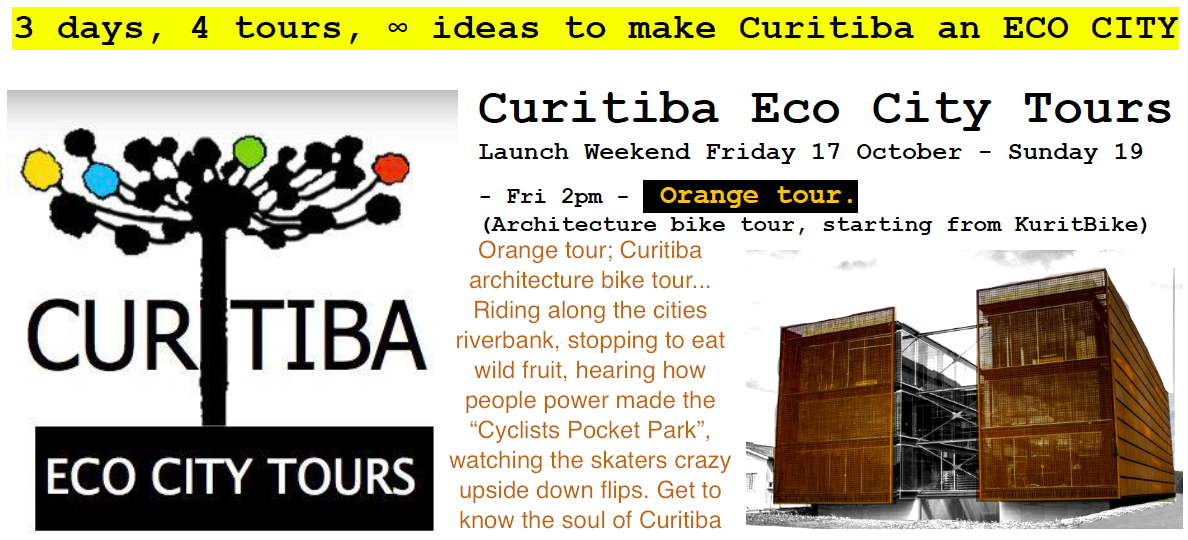
finishing off id like to bring it back again to urbanism and another song, perhaps the second last: the model urban city, re sustainable design, is for me, and many more: Curitiba, in South Brazil, its success is due to the then mayor and architect Jaime Lerner. hes says “cities are not the problem, they are the solution. Each city can be sorted in 3 years” he proscribes urban acupuncture and smart systems thinking. He finishes off many of his talks requesting the “audience” to help him sing the Sustainability song, see it here at end of his TED talk.

I feel things are growing, i feel we will get there, i have HOPE that this is the case, its what drives me!

I think the key for us, is that we have a road map, a design idea that we feel works and from that we work toward getting there, so there in full agreement of critical things like CAT´s ZERO CARBON BRITAIN,

Anyway, keep it up, let me know more about how you feel about the project, are people starting to roll into the idea, what problems to you see, how do we get around them, what about tek end?? id suggest hooking up with hamish and richard who ran climate tv last year at climate camp, they were / are still part of the undercurrents vid activist network. the indymedia network, i think, will play critical role in the global network side of thing, im connected a bit there, but im far from a tekky, but ive mates who will support. also i think the key will be the radio side of things, getting as many stations around planet to tune into and play our transmissions, either live or archived, this is the type of project which can go viral, ie, explode, once the basic structure is there, its simple and it works, once one can click and participate, more can and will, this amplifies the whole thing… in time (still a few years away) it will be the norm!

Regarding radio network, id suggest the AMARC ( World Association of Community Radio Broadcasters) network too, at the G8 in scotland 05, we did live radio project with them from edinburgh direct to african communities. They are currently broadcasting from the current World Social Forum from Belém in Brazil. Id also suggest looking at the very successful INDYMEDIA tv network from g8 at germany in 06: G8-TV. Another team we should connect up with are the radio team from London who were responsible for Climate radio last August, Dissident Island.

Id like to propose to the transition town network the idea, i think that would be nice and do-able, both benefit, both actually same thing, more or less. on that note we are currently working on translation project for transition films at present.

Im cc-ing a few people on this mail, in hope that they might be excited about these ideas, maybe add their inputs, and from that, be invovled in very exciting action soon for global ecological change.

Regards from BCN

dunk

Now back to Bucky

Buckminster Fuller TV interview 1974 – World Game Synergy Anticapatory


9th World Social Forum Kicks Off in Brazil

January 28, 2009

Another World is possible! Is it? If so, how?

(this article was first published on IMC-IE)

In Brazil, more than one hundred thousand people are gathering for the ninth World Social Forum. A crowd of some fifty thousand kicked off the event Tuesday with a march through the Amazon city of Belem. The World Social Forum gathers social movements from around the world under the theme of ‘another world is possible.’ It’s timed to coincide with the gathering of corporate leaders in the Swiss town of Davos.

Watch latest vids from WSF TV. Listen to AMARC live radio broadcasts.

All infos on main site: WSF 2009 @ Belém – Pará – Brasil: 27 jan – 1 feb

AMARC AUDIO # 1 : Walden Bello on role of WSF and beyond

Foro Social Mundial @ Kenya 2007 (mostly in Portugese)

Another World is possible!
Rallying around the call of “Another World Is Possible,” the World Social Forum has placed social justice, gender equality, peace, and defense of the environment on the agenda of the world’s peoples. World Social Forums have collectively expanded the democratic spaces of those seeking concrete, progressive alternatives to imperialist globalization.

Why Belém, Brazil?
The city was chosen to host the 2009 edition of the global forum in order to highlight the importance of the Amazon region for the entire world, and because its local cultural, political and economic reality is strongly linked to many WSF issues, such as bio-diversity, climate change, ethnic and cultural diversity, colonialism, militarism and the various connections between labour and production (from subsistence mineral extraction to hi-tech industry).

Another World is possible! Is it? If so, how?
This post is not a dig at the social forum process, rather a question pondering whether this process is of any importance to us now on the distant side of this planet of suffering. Currently, there is no mention of this event on indymedia.org, indymedia Ireland or some of the email lists circulating amongst those working in Irish social movements and beyond.

How do those of us, many miles away, and in a different sense, many worlds away from Belém view these goings on? Do we have anything to contribute, do we have anything to learn, are there ways in which this process / event can be improved upon? When first it started, many felt something special was growing. In Ireland we had our own social forum(s), for many, both global and local they felt there was hijacking moves being made, at other times it was felt just to be yet another thing not worth bothering about. 2 years ago, when the WSF happened in Kenya, some of us tried to “horizontalise” the social forum process, to connect different communities in struggle with others in similar situations on other sides of the planet, we used radio streaming technology to listen live to others` stories, to a small extent we succeeded. Communities in Barcelona listening to Mary Cummings from the north wall womens centre talking about their story about the topic of “housing” felt similar things at play, corruption, speculation, inability for normal people to get adaquate housing…

The question im simply trying to pose is, does this social forum process still matter? If not, why did it fail? And lastly, if its something which still matters, and it just seems not much is happening in our part of the world about it, what can be done to improve things?

World Social Forum 2008 – Global

The eighth World Social Forum 2008 was not organized at a particular place, but globally, which means by thousands of autonomous local organizations, on or around January 26. They are also known as the Global Call for Action.


World Social Forum 2007 – Kenya

Others are not traveling to Narobi but are staying at home to support the network by attempting to widen the discussion with the Global Listening Nodes project: a proposal to Syndicate content from different nodes in social centers and other alternative media outlets during the WSF and combine it with content from Nairobi also. A kind of global collaboration on both virtual and physical. Basically getting more social centres and other spaces to open up during WSF as local nodes around planet for people to go to to firstly listen to stuff live from kenya, but also maybe where they could have 2 way systems: being able to participate in forum without physically being there.

Related: Indymedia radio support for WSF 2007 from Kenya

When Social Fora break down, break up, splinter…
The European Social Fora 2004 – London

Past World Social Forums

Past IMC WSF coverage : 2006: Venezuela | Bamako, Mali | Pakistan (Znet) : 2005: Porto Alegre, Brazil : 2004 : Mumbai, India : 2003 : Porto Alegre, Brasil : 2002 : Porto Alegre, Brazil : 2001: Porto Alegre, Brazil

IMC-BRASIL @ WSF 2009

Land art in defence of the Amazon @ WSF 09

Indigineous tribes @ WSF 09

WSF TV : daily 4 – 5 minute clips